Hello and welcome to the latest blog from The Olivia Rose Diaries on October 14th.
When I was a child I was always asking my parents questions. Why does this happen? How does that work? Where does that come from? I don’t think I was unusual, it was just the natural curiosity of a child. I asked so many questions that I drove them to distraction but I couldn’t help myself. The questions popped out of my mouth seemingly of their own volition.
All these years later I still ask questions, but fewer of them, and rarely do I have time to look for the answers. I feel as if that natural curiosity about my world is muted, buried under both the natural demands of an adult life but also smothered by an overload of information, much of which I don’t want, but which is just part of our digital age. My brain has so many things to process it no longer has the capacity for whimsical questions or the energy to pursue the answers.
I have decided that I am not happy with this situation. Curiosity is a wonderful thing. It prevents life from becoming stale and routine, offering the promise of learning something new, of gaining a greater appreciation of what is around us. Most of all the simple act of wondering about something can bring a sense of wonder into our lives and remind us that we do actually live in a wonderful and amazing world. I want my sense of curiosity back on centre stage where it belongs and I appreciate that if I want to re-establish that connection I have to make an effort and carve out some time for myself.
I have set myself the challenge of asking, and then answering, a question, or questions, every week for a year. These questions simply have to start with a ‘why, where, what, how or when’ and can be about any subject, silly or serious, that flits into my mind over the week. I will do this without judgement, not letting myself be held back by fear of looking stupid or ignorant, knowing that this exercise is purely for myself (and occasionally you – sorry!). All questions and answers will be hand written, not typed on a lap top as that is associated with work or day-to-day administration and this is ‘me-time’, pure indulgence. And I have an attractive, brightly coloured note pad set aside for all my scribblings. I’ve no idea whether I will stick to this plan. I hope so, but time will tell and perhaps I shall learn more than I think I will. However, I have made a start and I thought I would share this first question with you.
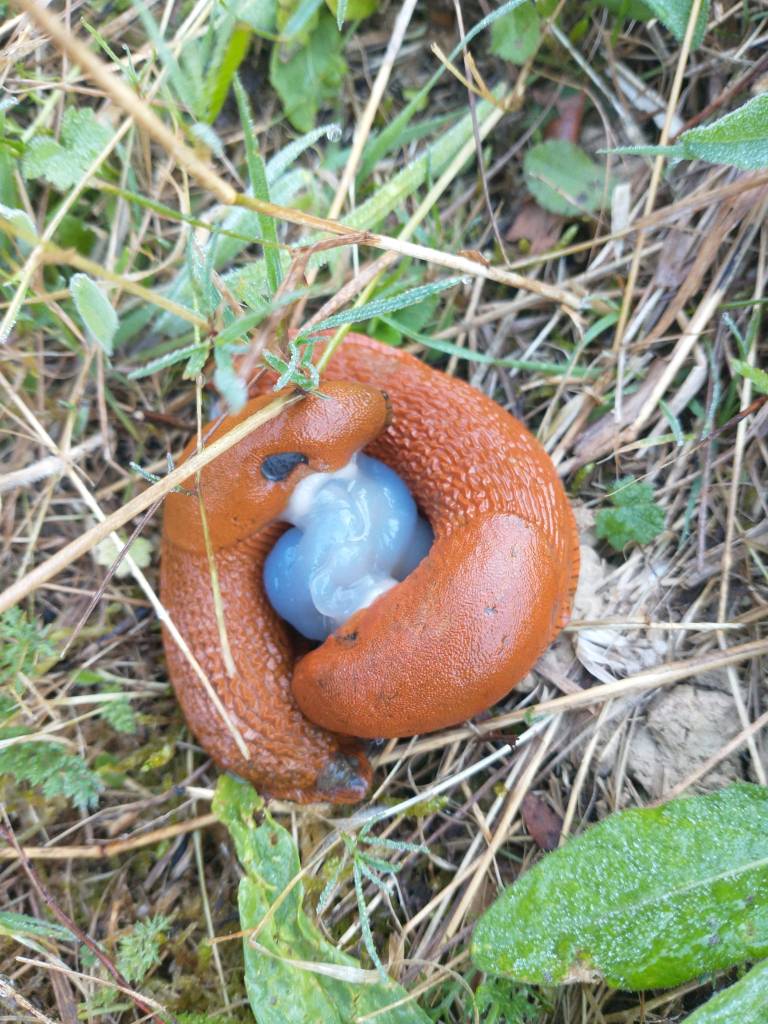
Most mornings now I walk along our track to the far end of the field to the caravan, which is my haven as well as my office and the place that I write my books. And this is what I have been seeing. Loads of very large slugs, so many that I have to watch where I put my feet. However my particular question relates to the photo below: what exactly are they doing and what is that white gelatinous blob between them?
The answer?
Not at all what I expected .
The white gelatinous blob is in fact two intertwined penis – no idea what the plural of penis is! (That is another question but I am not going to concern myself too much with spelling or grammar on this quest). What is even stranger is that it comes from an opening on the side of their heads and can be as long as their bodies -now that’s something to brag about.
Slugs are hermaphrodites, having both male and female reproductive organs, but they must find a mate to exchange sperm with. Once the sperm has been exchanged, each slug will lay a batch of eggs in a moist crevice. Wouldn’t it be fascinating to be there as the baby slugs appear? It’s a sight I imagine few people have seen. These eggs will hatch in a month or two, and reach maturity in another couple of months. I went back to my mating slugs 45 minutes after taking the photo above and it was all over. They were moving off in different directions and all that remained was a layer of oozy slime on the patch of grass.
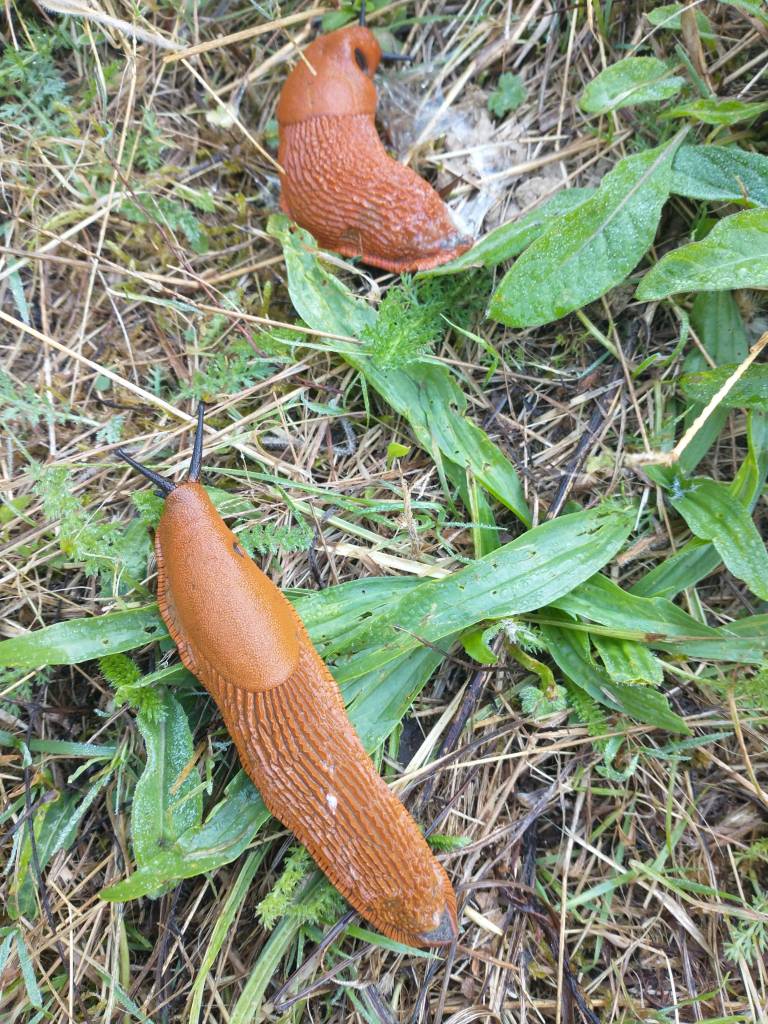
One simple question can’t help but lead to others and so now I know that a single slug has the ability to lay up to 500 eggs in a year, although it can be significantly less depending on the temperature and the general climactic conditions. Their typical lifespan ranges from between 6 -12 months, and whilst they weren’t my favourite creature until this point as they have devoured my chrysanthemums in one night, I am now aware that they provide food for all sorts of birds and mammals, slow worms, earthworms and a multitude of insects. They are an important part of the food chain and, now I know a little more about them, it is easier to practise a live-and-let-live philosophy.
Michael has also been tempted to delve into the secret world of slugs and informs me that the collective noun can be a cornucopia, a phlegm, or a slime.
Each morning, as I commute to my office armed with this knowledge, I make a point of looking more closely at what is happening in the world of slugs along my path. I even caught one slowly munching its way through a leaf, as you can see from the video below. I have a whole new appreciation of ‘slow food’ and, with so much to look at, my walk to work is taking longer each day.
And as for my poor chrysanthemums?
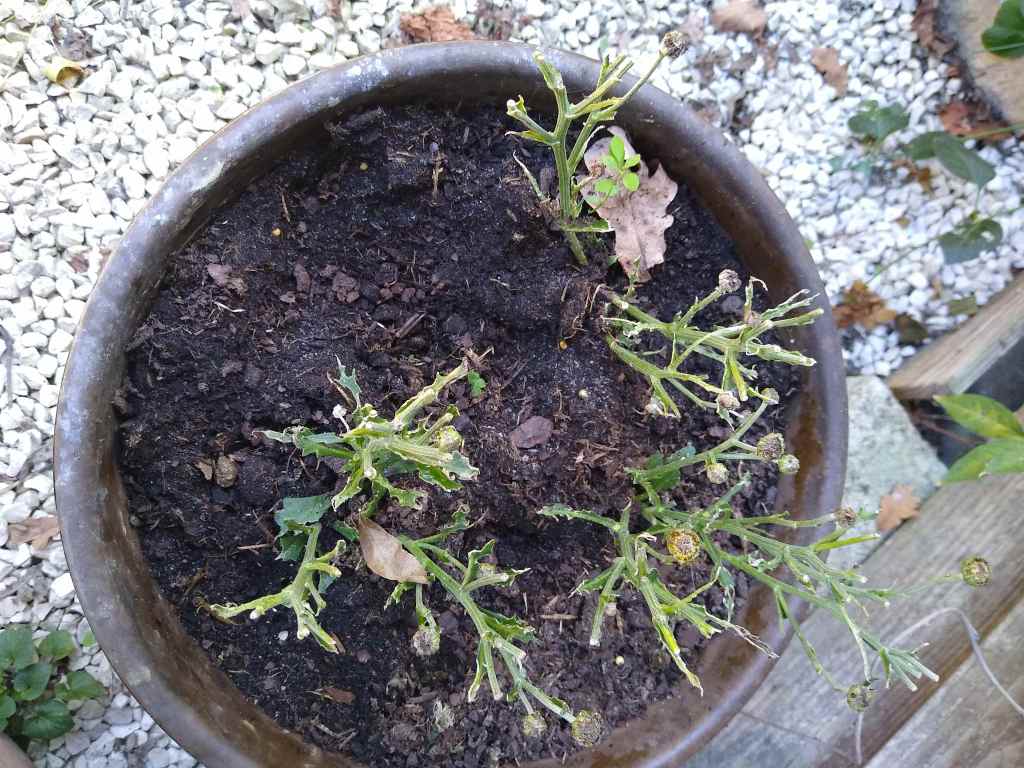
Well, I have heard that copper tape stops slugs in their tracks and so my pots now have a necklace of copper around them and I have, probably foolishly, bought some more chrysanthemums.

And that wraps it up for this week. The weather is finally meant to break today and never have I prayed so fervently for autumn to arrive. We have spent the whole of this week in the high 20’s/low 30’s which is ridiculous for October and have been over-run by mozzies, hornets and leafcutter beetles who are totally confused by the abnormal heat and making life uncomfortable for everyone else. But thankfully no bed bugs. Or none that we know about.
Hope you are all a little less hot and bothered than I am! See you soon.
MJ
 The Olivia Rose Diaries
Thank you! It is great to learn new things. I hope you will continue to share your questions and the answers.
LikeLike
There’s a good chance I will inflict some more of them on you every now and then!
MJ
LikeLike
Brilliant, and it did make me laugh out loud! Natural history at its best!
LikeLike
Glad you enjoyed it! I certainly got a happy little glow from the whole exercise.
MJ
LikeLike
Well, who knew?!
LikeLike
We all know now!
MJ
LikeLike
A gardener’s nemesis! I have trouble letting these guys proliferate in my garden. I can’t muster compassion for them, sorry! Though I collect them daily, there are always more. They do A LOT of damage, as you found with your plant. Disgusting too, bah!
LikeLike
Ah Eliza, now I feel I have to defend them!!! But I don’t have much of a garden for them to destroy. I can imagine it would be soul destroying in your lovely garden.
MJ
LikeLike
Thanks, MJ, for your kind comeback. Ask anyone who knows me about the most particular thorn in my side, and they’ll tell you ‘slugs!’
LikeLike
I used to remove these slugs from my garden, in Moretonhampstead and walk them down the lane depositing them in a countryside hedge. This seemed to work. Less sligs overall. Thankyou for enjoying and respecting nature! Looking forward to other questions – and answers..
LikeLike
Hi Caya. Well that seems an excellent solution! Although hard work….
MJ
LikeLike
I do loathe slugs, I’m afraid, but that dates from a very early age when an older cousin told me to drop a brick on one and then turn it over. I leave you to imagine the rest. Leopard slugs, on the other hand, are meant to be good for the garden, but I still can’t quite accept them.
LikeLike
Hi Vanessa. I think the brick experience probably scarred you for life!
MJ
LikeLiked by 1 person
Thank you MJ for delightful enlightenment on a slugs reproductive cycle. Apparently the slime is supposed do wonders for the skin😳
I agree with everyone/everything has a reason for being on this planet and good to learn how to get along without upsetting the balance.
Keep those stories coming MJ. Really enjoyable 🙏
LikeLiked by 1 person
Hi Mary. The thought of putting that slime anywhere on my skin is completely 😜!! Glad you enjoyed the story. I’ll probably aim to include one each month.
MJ
LikeLike